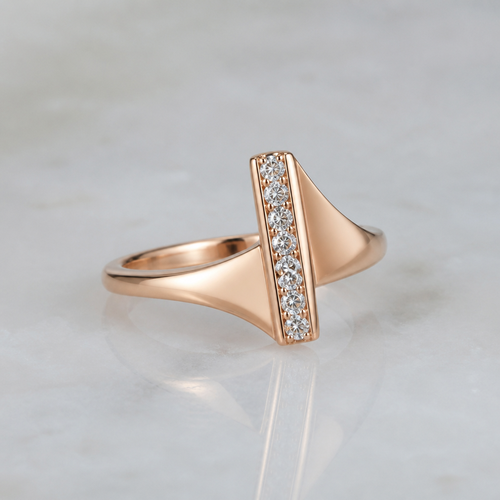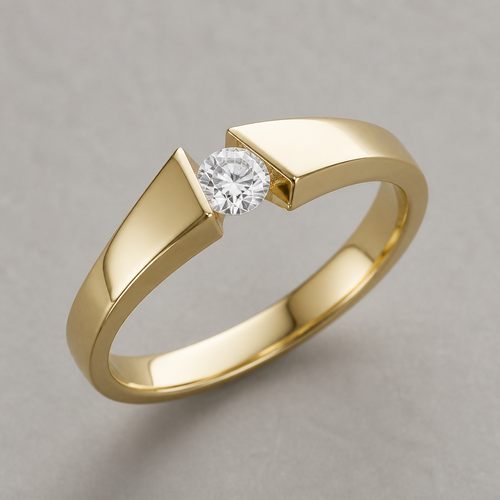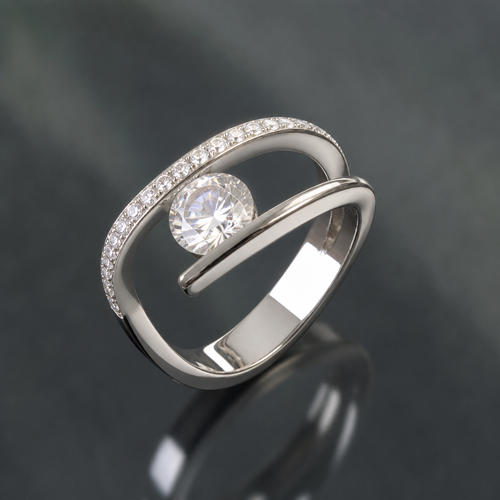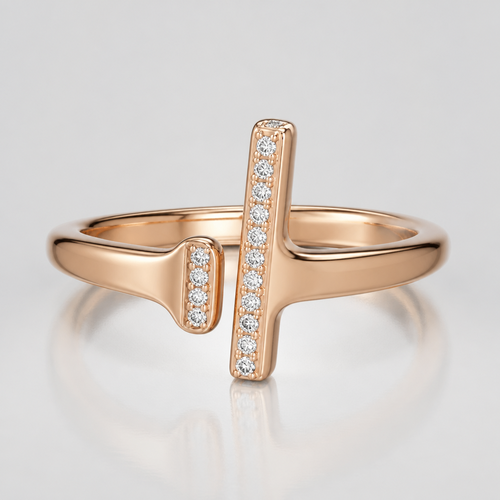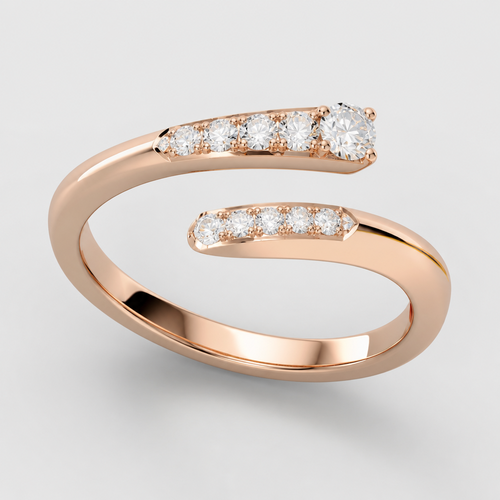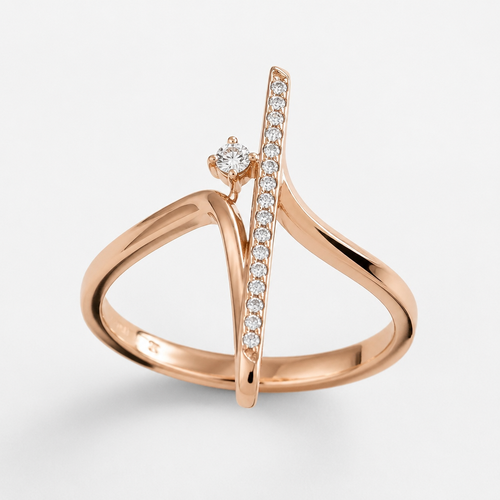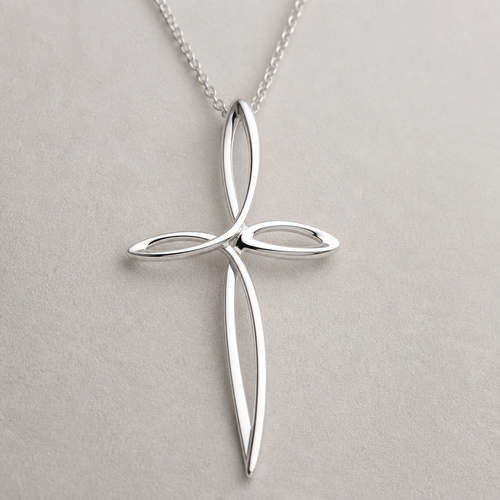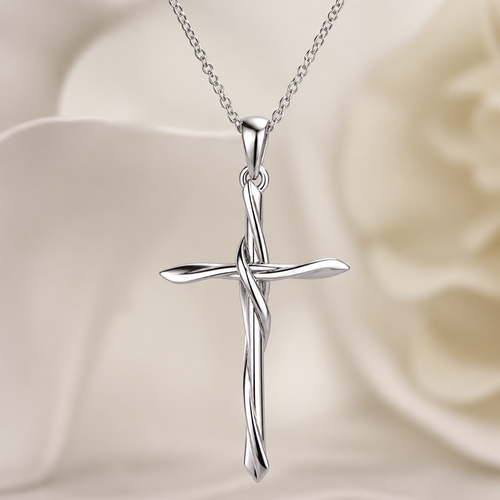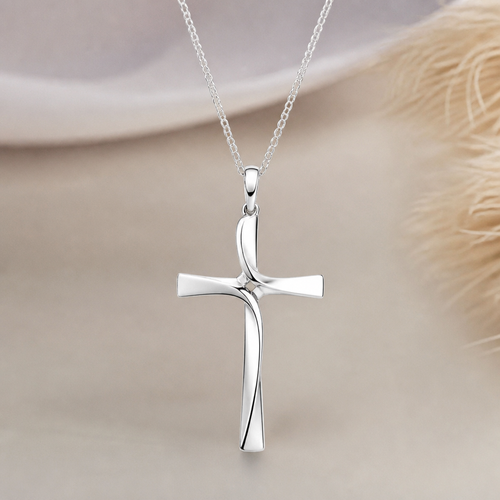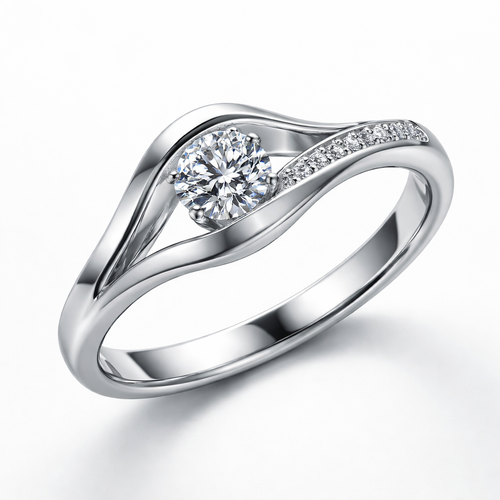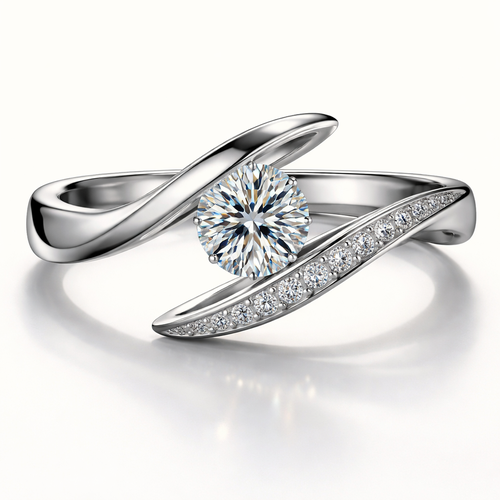
A women's ring, detailed and decorative, moderately ornate. Create a high-end photorealistic fine-jewelry rendering of a minimalist floating marquise engagement ring, using the attached real-world floating/semi-bezel marquise ring as the construction reference for how a large marquise can be supported close to the finger. Do not copy its visible bezel; translate its low-profile structural concept into the design described below.

The ring features one single 1.90 carat marquise-cut diamond, oriented east-to-west, on an extremely thin, perfectly flat 18k yellow-gold band. The diamond is intentionally oversized relative to the delicate shank and must visually dominate the ring.

Visible stone retention consists of ONLY TWO extremely tiny yellow-gold point claws, one precisely at the east tip and one precisely at the west tip. Each claw should hug the pointed end of the marquise and appear almost like a tiny continuation of the gold band. The claws must be refined, narrow, sharp, and integrated—not round beads, balls, hooks, loops, chevrons, or large prongs. They should cover the absolute minimum amount of the diamond possible while providing realistic edge security.

The flat shank should flow continuously and smoothly into the two point claws. There should be no raised shoulders, no upward hooks, no bulbous transitions, no decorative curves, and no conventional four-prong or six-prong appearance.

The diamond should appear visually suspended above the band from the front. Do not place any visible gold underneath the center of the diamond. No gold nugget, gold bump, culet ball, center post, pedestal, basket, gallery rail, crossbar, decorative bridge, halo, bezel surrounding the stone, or other obvious mounting structure should be visible through the face-up view.

Beneath the diamond, use the minimum physically necessary structural support, inspired by the low-profile construction of a real floating/semi-bezel marquise ring. Any support must be extremely thin, broad enough to distribute the load, and follow the natural underside/pavilion geometry of the diamond rather than forming a lump. It should sit immediately beneath the pavilion and remain visually concealed by the diamond from the face-up and normal 3/4 views. The support must never protrude downward as a visible gold post or nugget.

The pavilion must have realistic depth and clearance. The stone must sit at a believable height above the finger for a real 1.90 ct marquise while remaining exceptionally low-profile. The design should look like something an expert jeweler could actually fabricate and wear every day—not an unsupported floating CGI object.

Diamond shape is critical: preserve a graceful, elegant marquise outline with pointed east and west ends and smoothly curved upper and lower arcs. Do not make the stone overly round, swollen, football-shaped, pear-shaped, oval, or distorted. Maintain consistent marquise proportions in every view.

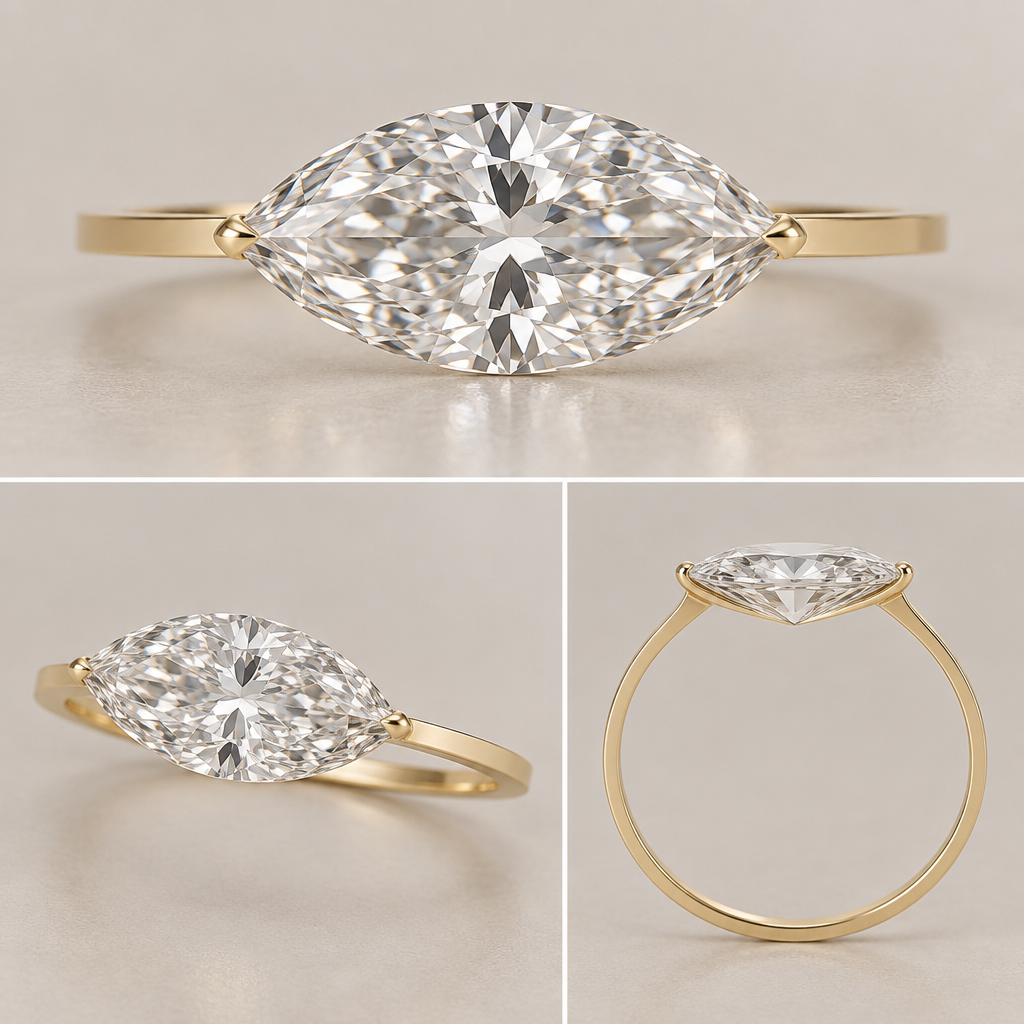
Show the exact same ring, exact same diamond, and exact same setting in three coordinated views:

1. Straight-on face-up view: the marquise is perfectly horizontal and centered. The diamond dominates the composition. Only the two tiny point claws are visible at the extreme east and west tips. The band appears to pass directly behind the stone.


2. 3/4 perspective view: reveal the thin flat yellow-gold shank and the true low-profile relationship between the diamond and band. Show the tiny tip claws and subtle concealed pavilion support without introducing additional visible prongs or decorative metal.


3. True side/profile view: show the actual pavilion depth, realistic clearance above the finger, and the minimum structural support required beneath the diamond. The support should look like a thin engineered seat integrated into the setting, not a gold ball, nugget, pedestal, basket, or thick gallery.


Maintain identical diamond proportions, orientation, scale, band thickness, claw placement, and setting architecture across all three views. Do not redesign the ring between angles.

Materials: realistic polished 18k yellow gold, extremely thin flat shank, natural high-quality colorless diamond, physically accurate diamond facets, realistic reflections and refraction, realistic metal thickness, realistic contact points, realistic jewelry engineering.

Overall aesthetic: quiet luxury, architectural minimalism, exceptionally delicate, contemporary, sophisticated, diamond-first. The visual impression should be an enormous marquise diamond held almost invisibly by two tiny gold points over an impossibly simple flat gold band, while the unseen construction remains physically credible.

photorealistic jewelry design, A women's ring, detailed and decorative, moderately ornate. Create a high-end photorealistic fine-jewelry rendering of a minimalist floating marquise engagement ring, using the attached real-world floating/semi-bezel marquise ring as the construction reference for how a large marquise can be supported close to the finger. Do not copy its visible bezel; translate its low-profile structural concept into the design described below.

The ring features one single 1.90 carat marquise-cut diamond, oriented east-to-west, on an extremely thin, perfectly flat 18k yellow-gold band. The diamond is intentionally oversized relative to the delicate shank and must visually dominate the ring.

Visible stone retention consists of ONLY TWO extremely tiny yellow-gold point claws, one precisely at the east tip and one precisely at the west tip. Each claw should hug the pointed end of the marquise and appear almost like a tiny continuation of the gold band. The claws must be refined, narrow, sharp, and integrated—not round beads, balls, hooks, loops, chevrons, or large prongs. They should cover the absolute minimum amount of the diamond possible while providing realistic edge security.

The flat shank should flow continuously and smoothly into the two point claws. There should be no raised shoulders, no upward hooks, no bulbous transitions, no decorative curves, and no conventional four-prong or six-prong appearance.

The diamond should appear visually suspended above the band from the front. Do not place any visible gold underneath the center of the diamond. No gold nugget, gold bump, culet ball, center post, pedestal, basket, gallery rail, crossbar, decorative bridge, halo, bezel surrounding the stone, or other obvious mounting structure should be visible through the face-up view.

Beneath the diamond, use the minimum physically necessary structural support, inspired by the low-profile construction of a real floating/semi-bezel marquise ring. Any support must be extremely thin, broad enough to distribute the load, and follow the natural underside/pavilion geometry of the diamond rather than forming a lump. It should sit immediately beneath the pavilion and remain visually concealed by the diamond from the face-up and normal 3/4 views. The support must never protrude downward as a visible gold post or nugget.

The pavilion must have realistic depth and clearance. The stone must sit at a believable height above the finger for a real 1.90 ct marquise while remaining exceptionally low-profile. The design should look like something an expert jeweler could actually fabricate and wear every day—not an unsupported floating CGI object.

Diamond shape is critical: preserve a graceful, elegant marquise outline with pointed east and west ends and smoothly curved upper and lower arcs. Do not make the stone overly round, swollen, football-shaped, pear-shaped, oval, or distorted. Maintain consistent marquise proportions in every view.

Show the exact same ring, exact same diamond, and exact same setting in three coordinated views:

1. Straight-on face-up view: the marquise is perfectly horizontal and centered. The diamond dominates the composition. Only the two tiny point claws are visible at the extreme east and west tips. The band appears to pass directly behind the stone.


2. 3/4 perspective view: reveal the thin flat yellow-gold shank and the true low-profile relationship between the diamond and band. Show the tiny tip claws and subtle concealed pavilion support without introducing additional visible prongs or decorative metal.


3. True side/profile view: show the actual pavilion depth, realistic clearance above the finger, and the minimum structural support required beneath the diamond. The support should look like a thin engineered seat integrated into the setting, not a gold ball, nugget, pedestal, basket, or thick gallery.


Maintain identical diamond proportions, orientation, scale, band thickness, claw placement, and setting architecture across all three views. Do not redesign the ring between angles.

Materials: realistic polished 18k yellow gold, extremely thin flat shank, natural high-quality colorless diamond, physically accurate diamond facets, realistic reflections and refraction, realistic metal thickness, realistic contact points, realistic jewelry engineering.

Overall aesthetic: quiet luxury, architectural minimalism, exceptionally delicate, contemporary, sophisticated, diamond-first. The visual impression should be an enormous marquise diamond held almost invisibly by two tiny gold points over an impossibly simple flat gold band, while the unseen construction remains physically credible., modern style, just the design no text

A women's ring, detailed and decorative, moderately ornate. Create a high-end photorealistic fine-jewelry rendering of a minimalist floating marquise engagement ring, using the attached real-world floating/semi-bezel marquise ring as the construction reference for how a large marquise can be supported close to the finger. Do not copy its visible bezel; translate its low-profile structural concept into the design described below. The ring features one single 1.90 carat marquise-cut diamond, oriented east-to-west, on an extremely thin, perfectly flat 18k yellow-gold band. The diamond is intentionally oversized relative to the delicate shank and must visually dominate the ring. Visible stone retention consists of ONLY TWO extremely tiny yellow-gold point claws, one precisely at the east tip and one precisely at the west tip. Each claw should hug the pointed end of the marquise and appear almost like a tiny continuation of the gold band. The claws must be refined, narrow, sharp, and integrated—not round beads, balls, hooks, loops, chevrons, or large prongs. They should cover the absolute minimum amount of the diamond possible while providing realistic edge security. The flat shank should flow continuously and smoothly into the two point claws. There should be no raised shoulders, no upward hooks, no bulbous transitions, no decorative curves, and no conventional four-prong or six-prong appearance. The diamond should appear visually suspended above the band from the front. Do not place any visible gold underneath the center of the diamond. No gold nugget, gold bump, culet ball, center post, pedestal, basket, gallery rail, crossbar, decorative bridge, halo, bezel surrounding the stone, or other obvious mounting structure should be visible through the face-up view. Beneath the diamond, use the minimum physically necessary structural support, inspired by the low-profile construction of a real floating/semi-bezel marquise ring. Any support must be extremely thin, broad enough to distribute the load, and follow the natural underside/pavilion geometry of the diamond rather than forming a lump. It should sit immediately beneath the pavilion and remain visually concealed by the diamond from the face-up and normal 3/4 views. The support must never protrude downward as a visible gold post or nugget. The pavilion must have realistic depth and clearance. The stone must sit at a believable height above the finger for a real 1.90 ct marquise while remaining exceptionally low-profile. The design should look like something an expert jeweler could actually fabricate and wear every day—not an unsupported floating CGI object. Diamond shape is critical: preserve a graceful, elegant marquise outline with pointed east and west ends and smoothly curved upper and lower arcs. Do not make the stone overly round, swollen, football-shaped, pear-shaped, oval, or distorted. Maintain consistent marquise proportions in every view. Show the exact same ring, exact same diamond, and exact same setting in three coordinated views: 1. Straight-on face-up view: the marquise is perfectly horizontal and centered. The diamond dominates the composition. Only the two tiny point claws are visible at the extreme east and west tips. The band appears to pass directly behind the stone. 2. 3/4 perspective view: reveal the thin flat yellow-gold shank and the true low-profile relationship between the diamond and band. Show the tiny tip claws and subtle concealed pavilion support without introducing additional visible prongs or decorative metal. 3. True side/profile view: show the actual pavilion depth, realistic clearance above the finger, and the minimum structural support required beneath the diamond. The support should look like a thin engineered seat integrated into the setting, not a gold ball, nugget, pedestal, basket, or thick gallery. Maintain identical diamond proportions, orientation, scale, band thickness, claw placement, and setting architecture across all three views. Do not redesign the ring between angles. Materials: realistic polished 18k yellow gold, extremely thin flat shank, natural high-quality colorless diamond, physically accurate diamond facets, realistic reflections and refraction, realistic metal thickness, realistic contact points, realistic jewelry engineering. Overall aesthetic: quiet luxury, architectural minimalism, exceptionally delicate, contemporary, sophisticated, diamond-first. The visual impression should be an enormous marquise diamond held almost invisibly by two tiny gold points over an impossibly simple flat gold band, while the unseen construction remains physically credible.

Keep exploring

More Modern